
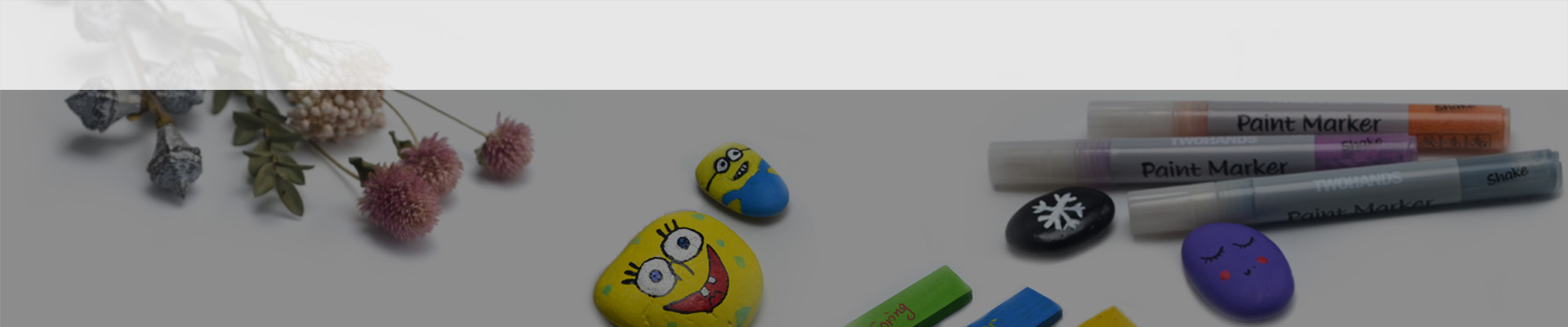

Twohands Stationery — a professional acrylic paint marker manufacturer established in 2010, with an established reputation for reliability and quality that has made them a trusted partner for well-known global brands — produces acrylic paint marker sets across standard and custom configurations for art supply distributors worldwide. Their acrylic paint marker range covers multiple tip sizes, color configurations, and packaging formats for retail and wholesale distribution.
The acrylic paint marker market in 2026: why factory-direct sourcing is now accessible to mid-size distributors
Three market developments have changed the economics of acrylic paint marker sourcing for art supply distributors in 2026: (1) Minimum order quantities have compressed — the 5,000-unit MOQ that was standard for custom color sets in 2018 has fallen to 1,000–2,000 units for many manufacturers as production capacity has expanded; (2) Chinese manufacturers have invested in quality control systems that meet international brand standards — ISO 9001, environmental compliance, and third-party testing are now standard capabilities among serious manufacturers; (3) The rise of consolidated freight and logistics platforms has reduced the landed cost gap between trading company sourcing and factory-direct procurement to the point where factory-direct is now profitable even for mid-volume orders. The art supply distributor who is still paying a trading company margin is leaving 15–25% on the table that factory-direct sourcing would deliver.
Understanding Acrylic Paint Marker Construction and Quality
The Components of an Acrylic Paint Marker
An acrylic paint marker is a precision instrument combining multiple engineered subsystems. Understanding these components is essential for specifying and evaluating a manufacturer:
- Acrylic paint ink: The core of the marker — a fast-drying, pigmented acrylic formulation that adheres to a wide range of surfaces (paper, canvas, wood, metal, glass, plastic). The ink formulation determines color vibrancy, lightfastness, dry time, and ink flow consistency. Quality ink uses fine pigment dispersion (particle size below 5 microns) that prevents tip clogging and ensures consistent color laydown
- Valve system: The mechanism that controls ink flow from the reservoir to the nib. Acrylic paint markers use either a capillary valve (for fine tip markers) or a vacuum/pressure valve (for broad chisel and marker tips). The valve quality is the primary determinant of ink flow consistency — poor valve quality causes ink starvation at the nib or flooding
- Nib (tip): The replaceable or fixed tip that deposits ink on the surface. Common nib types: fine point (0.5–1mm), medium point (2–3mm), chisel tip (3–15mm), and brush tip (variable width). Nibs are made from polyester felt, acrylic fiber, or nylon fiber — fiber quality and density determine ink flow and laydown characteristics
- Barrel/reservoir: The ink container — typically a twin-tube system with an inner ink chamber and a pressurization chamber. The reservoir material must be compatible with acrylic paint solvents; low-quality plastic barrels can cause ink degradation over shelf life
- Cap: The airtight seal that prevents ink drying in the nib between uses. Quality caps incorporate a conditioning fluid that maintains nib moisture between uses — essential for preventing the tip dry-out complaints that generate negative reviews
Quality Indicators in Acrylic Paint Marker Manufacturing
| Quality Indicator | What to Look For | Red Flag |
|---|---|---|
| Ink formulation | Fine pigment dispersion (under 5 microns); lightfastness rating (ASTM D4303, minimum 6 on blue wool scale for artists’ quality) | No lightfastness data; coarse pigment visible in ink |
| Valve mechanism | Consistent ink flow from first mark to last; no flooding or starvation | First marks are too wet; last marks are dry |
| Nib quality | Dense, uniform fiber nib; no shedding; maintains shape after extended use | Loose fibers; nib flattens immediately; ink channels clog |
| Seal/cap integrity | Cap seats with audible click; no ink dry-out after 72 hours uncapped | Cap requires force to seat; tip dries within hours |
| Shelf life | Minimum 18-month shelf life from manufacture date | No manufacture date or shelf life stated |
Factory-Direct vs. Trading Company Sourcing: The Real Margin Difference
The acrylic paint marker supply chain has three levels of markup between the factory and the retail shelf:
- Factory → Trading company: Trading company margin typically 8–15% added to factory price
- Trading company → Distributor/brand: Additional 20–35% margin to cover trading company operating costs and profit
- Distributor → Retail: Additional 40–60% markup to cover distributor costs and margin
A paint marker set priced at $8.00 per unit FOB factory might carry a trading company invoice price of $9.20–$10.00 per unit, and a distributor invoice price of $13.00–$15.00 per unit. The art supply distributor who buys factory-direct from the same factory eliminates two margin layers — the trading company margin and the distributor margin — and can price competitively while carrying materially better gross margin per unit.
How to Identify a Genuine Acrylic Paint Marker Manufacturer vs. a Trading Company
- Request a factory tour (in-person or via live video). Trading companies will resist or decline; genuine manufacturers will accommodate
- Ask for the factory’s business license and verify the registered scope of business: “manufacturing” vs. “wholesale and retail” vs. “export trade”
- Request production capability data: number of ink mixing tanks, coating lines, assembly stations, and daily capacity
- Request ink formulation data: Material Safety Data Sheet (MSDS) and Technical Data Sheet (TDS) for each ink color
- Trading companies typically sell multiple unrelated product categories; specialist acrylic paint marker manufacturers focus on markers and related writing/drawing instruments
Custom 12-Color Set Specification for Art Supply Distributors
The 12-Color Set: Why This Configuration Dominates the Market
The 12-color acrylic paint marker set is the dominant retail configuration for several reasons: it is large enough to offer meaningful color range for most art and craft applications while remaining affordable at retail price points of $18–$35; it fits standard retail shelf and display formats; it is large enough to create a compelling product presentation in unboxing videos and social media content; and it represents a manageable inventory commitment for the consumer who is trying the product category for the first time.
Color Set Development: How to Specify the Right 12 Colors
The most common mistake in custom 12-color set development is specifying colors without considering the manufacturer’s ink library. A quality acrylic paint marker manufacturer maintains 60–120+ standard ink colors in their catalog — the art is in selecting the 12 that provide the most useful palette for your target customer segment:
Color Set Strategy by Target Customer
- General art and craft (kids, teens, hobby): Favor bright, saturated primaries and secondaries; include black, white, and at least one metallic (gold or silver); avoid earth tones and muted colors that look muddy in bright market packaging
- Professional artists (illustrators, designers): Include a full range of earth tones, neutrals, and flesh tones; include a titanium white and a dense black; minimize redundant bright colors that professionals rarely use
- Mixed media and crafters: Include colors that work on multiple surfaces (paper, canvas, wood); include a transparent extender or blending medium; avoid colors that are highly surface-dependent
- Calligraphy and detail work: Fine tip configuration as standard (not swapable); colors should be dense and opaque for layering work
OEM Customization Options for 12-Color Sets
| Customization Element | Options Available | Typical MOQ Impact |
|---|---|---|
| Barrel color | Standard colors (black, white, custom Pantone) | Low or no MOQ for standard colors |
| Cap color | Match barrel, or color-coded by color | Low MOQ |
| Label / imprint | Full-color printed label; laser-engraved barrel logo | No MOQ impact for label |
| Packaging box | Custom设计的彩盒包装 (custom designed color box) | MOQ 500–1,000 units for custom box |
| Color selection | Custom 12-color selection from ink catalog | No MOQ impact; key differentiation |
| Tip size | All-fine, all-chisel, mixed-tip sets | No MOQ impact |
| Blister card / tray insert | Custom thermoformed tray to hold markers | MOQ 1,000–2,000 units |
Custom Packaging: The Retail Shelf Decision
For the retail channel, the packaging is not secondary — it is the product decision. Key packaging formats:
- Collapsed display box (shelf-ready): The 12 markers are packed in a flat display box that retails as a complete set. The box artwork and branding carry the retail shelf presence
- Blister card on foldable backing: Each marker on an individual blister, mounted on a card that hangs on pegboard displays — better for hardware and specialty retail
- Tin box set: Metal tin packaging adds perceived value; tin is reusable as a storage container — popular at $25–$45 retail price points
- Clear-view pack: Shrink-wrapped tray showing all 12 markers visible through the packaging — emphasizes the color variety
Procurement Checklist: Acrylic Paint Marker Bulk Sourcing
- Confirm the supplier is a genuine manufacturer — not a trading company — through factory tour, business license verification, and production capability data
- Request ink formulation data for each color: MSDS, TDS, pigment particle size, and lightfastness rating (ASTM D4303 minimum)
- Request sample units and conduct practical testing: ink flow consistency across the full marker stroke, tip dry-out rate after uncapping, and color vibrancy on multiple surfaces
- Specify lightfastness requirements based on your target market — professional artists require minimum 6 on the blue wool scale; craft/hobby markets may accept lower ratings
- Verify the valve mechanism quality by testing multiple sample units from the same production batch
- Develop your 12-color custom set selection based on target customer segment — do not assume the manufacturer’s pre-built sets are optimal for your market
- Request Pantone color matching if you are specifying brand-matched colors — confirm the delta-E tolerance and whether the manufacturer can provide spectrophotometric data
- Clarify the packaging format for your retail channel — the packaging decision affects both retail shelf presence and landed cost
- Confirm the manufacturer’s quality defect rate and what the production batch inspection protocol looks like
- Negotiate the tooling/acid cost structure: custom color box tooling, custom blister tray, and any label printing plate costs — clarify whether these are one-time costs or amortized per unit
- Establish payment terms that protect both parties: typically 30% deposit, 70% against shipping documents or sample approval
Need an Acrylic Paint Marker Bulk Supplier for Your Art Supply Distributor Program?
Twohands Stationery — a professional acrylic paint marker manufacturer established in 2010, with an established reputation for reliability and quality — produces acrylic paint marker sets for art supply distributors and well-known global brands worldwide. The acrylic paint marker range includes multiple tip configurations, color options, and packaging formats for wholesale and OEM custom orders. Twohands supports custom 12-color set development with color matching, custom packaging, and private label branding for art supply distributors. Browse the full Twohands Stationery product range for markers, pens, and art supplies for wholesale and OEM orders.
Frequently Asked Questions
Q1: What is the realistic landed cost saving from factory-direct acrylic paint marker sourcing vs. trading company sourcing for a mid-volume distributor?
For a mid-volume distributor ordering 3,000–5,000 units of a 12-color acrylic paint marker set, the factory-direct landed cost is typically 30–45% below the equivalent trading-company-sourced price. This saving comes from eliminating two margin layers: the trading company’s 8–15% factory-to-trading-company margin and the distributor’s 20–35% trading-company-to-distributor margin. At a factory price of $8.00 per set, the trading company invoice might be $9.60–$11.00, and a distributor adding their margin might invoice at $13.50–$16.00 per set. Factory-direct at $8.00 with $2.00–$2.50 landed freight gives a total of $10.00–$10.50 per set — a saving of $3.50–$5.50 per unit against the trading company/distributor alternative, or $12,250–$27,500 on a 5,000-unit order.
Q2: How do I verify the lightfastness rating of acrylic paint markers from a Chinese manufacturer?
Request the manufacturer’s test report for each ink color against ASTM D4303 (Standard Test Methods for Lightfastness of Pigments and Dilutions of Artists’ Acrylic Emulsion Paints). The rating system is 1–8 on the blue wool scale: 1 = fugit (fades in less than 100 hours), 8 = excellent (no detectable fading after 1,000+ hours). For professional artists’ markets, minimum rating should be 6. For craft and hobby markets, 4–5 may be acceptable. If the manufacturer cannot provide ASTM D4303 test data, request an alternative recognized lightfastness test report and evaluate the result before committing to the color. Lightfastness claims without test documentation are marketing, not specification.
Q3: What is the typical MOQ for a custom 12-color acrylic paint marker set with custom packaging?
MOQ for a custom 12-color acrylic paint marker set varies by the degree of customization: standard colors from catalog, standard packaging: 500–1,000 units per color set configuration; custom color selection from catalog, standard packaging: 1,000–2,000 units; custom color selection + custom color box packaging: 1,000–2,000 units (custom box tooling typically $500–$2,000 one-time); fully custom (custom colors, custom box, custom blister tray): 2,000–5,000 units. Many manufacturers offer lower MOQs for initial orders with the commitment to higher volumes in subsequent orders — worth negotiating specifically.
Q4: How do I develop the right 12-color palette for my target customer segment?
Start with the manufacturer’s ink catalog and identify the color families available. Then build the palette using these principles: cover the full hue spectrum (red, orange, yellow, green, blue, violet — at minimum one from each); include practical essentials (black, white, silver/gold, brown); consider the target customer’s skin tone range if including flesh tones; and for professional artists, include earth tones (raw sienna, burnt umber, yellow ochre) that are absent from most bright-color beginner sets. Request ink swatch cards from the manufacturer before finalizing the palette — color on screen and color on paper are meaningfully different, and the manufacturer’s ink swatch book is your reference standard.
Q5: How do I protect my private label branding when sourcing acrylic paint markers from a Chinese manufacturer?
Key steps: (1) Register your brand in China (via CNIPA) before placing the first order — this gives you legal standing to act against IP infringement; (2) Include explicit IP ownership clauses in the purchase agreement — the manufacturer produces goods bearing your brand under license, not as a right; (3) Request exclusivity provisions for your specific color set configuration and packaging design — preventing the manufacturer from selling the same configuration to other buyers; (4) Conduct periodic production audits to verify the markers being produced for you are not also being sold to other customers; (5) Use a freight forwarder who can handle customs clearance without disclosing the manufacturer — some distributors prefer to maintain the manufacturer relationship as a trade secret.
Twohands Stationery is a professional manufacturer and innovator in the stationery industry, dedicated to producing a wide range of high-quality pens and markers. Since its establishment in 2010, Twohands has built an excellent reputation for reliability and become a trusted partner of many well-known global brands. TikTok | YouTube | Instagram | Facebook
Post time: May-26-2026
