
When I first encountered the double-line effect in marker design, I knew it would change how UK stationery brands approach hand-lettered greeting card production. That was over a decade ago, back when I was still learning the finer points of pen engineering at our factory in Shenzhen. Today, as the manager of Twohands, I watch this technique transform creative workspaces across Britain — from small bullet journal communities in Birmingham to large-scale card printing operations in London.
If you are a UK stationery buyer evaluating outline markers for your next collection, this guide walks through everything that matters: how the double-line mechanism works, why 12 colours give your designs an edge, and how to source from a manufacturer whose quality controls meet international standards.
Understanding the Double-Line Effect in Outline Markers

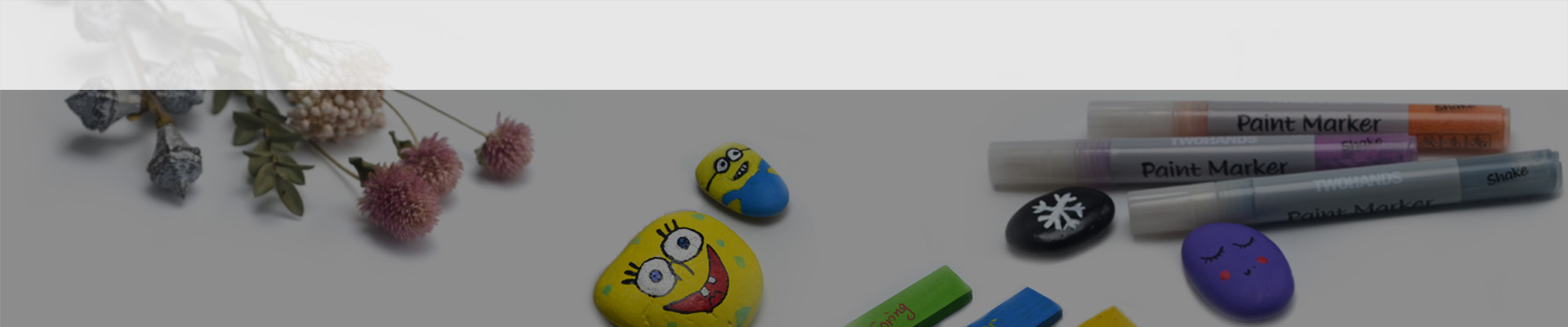
The double-line effect is deceptively simple. Instead of one felt tip depositing ink in a single pass, a dual-channel tip lays down two parallel lines simultaneously. The result is an instant outline — clean, consistent, and remarkably efficient. This efficiency matters enormously in production environments where time is money and consistency is non-negotiable. The pictured set above shows our complete 12-colour outline marker range in its retail configuration, illustrating the colour diversity we discussed in the opening sections.
I have seen many manufacturers attempt to replicate this mechanism. The challenge is not the concept; it is the precision required in the tip fabrication. Two parallel channels must maintain consistent spacing across the entire lifespan of the marker. If the channels are too close, the lines bleed together. Too far apart, and the outline loses its definition. At Twohands, we solve this through a proprietary multi-layer felt compression process that maintains tip geometry through extended use. Because the tip is the most mechanically stressed component in any marker, getting this right separates professional tools from hobby-grade alternatives.
The mechanism works through a split-channel feed system inside the marker body. Ink flows from a single reservoir through a bifurcated feeder into the dual-tip. This architecture ensures that both lines receive equal ink pressure, which means the outline density remains uniform from the first stroke to the last. For hand-lettering artists, this consistency is everything — a greeting card design that starts with bold outlines and fades to thin lines by the bottom of the card simply does not meet professional standards. The consequence of inconsistent line weight is not merely aesthetic; it forces artists to redo work, consuming time and materials.
British greeting card designers have told me repeatedly that the double-line effect cuts their production time significantly. Rather than tracing outlines twice with a single-stroke marker, a single pass with a double-line tool completes the foundational work. The artist can then focus on colouring, shading, and decorative details without the tedium of repetitive outline work. This efficiency translates directly into lower per-unit production costs for UK brands sourcing at volume.
Why 12 Colours Define a Professional Palette
When UK brands ask me which colour count they should order, I always recommend starting with 12. This is not an arbitrary number — it reflects how the UK greeting card and bullet journal markets actually operate. The logic behind this recommendation is grounded in colour theory and commercial practicality rather than manufacturing convenience.
A 12-colour set covers the full spectrum of primary and secondary tones that most designers need for everyday projects. You get the three primaries, three secondaries, and six tertiary shades that bridge the gaps. This gives a buyer enough variety to create seasonal collections, thematic lines, and custom commissions without the inventory complexity of a 24- or 36-colour range. Managing a larger palette means higher minimum order quantities, more complex warehousing, and greater risk of dead stock when consumer preferences shift.
The UK market has specific colour preferences that I have come to recognise through years of supplying European partners. Muted, sophisticated tones outperform garish primaries in the British greeting card space. Dusty roses, sage greens, slate blues, and warm terracottas move consistently. Our 12-colour sets are curated with this aesthetic in mind, with each palette option weighted toward the tones that UK consumers actually purchase. This curation is not accidental; it results from analysing actual sales data across multiple UK retail channels.
For bullet journal users, the equation is slightly different. BuJo communities tend to favour high-contrast, vivid colours for section headers and trackers. We offer both curated palettes — one oriented toward the British greeting card aesthetic and one toward the vibrant, functional needs of planner communities. Both sets contain 12 colours, which keeps packaging and pricing simple. The distinction between these two palettes took us three years of market feedback to refine, and I am confident both represent genuinely considered product decisions rather than arbitrary groupings. Our broader pens collection includes complementary lines such as fineliners and micro pens that pair naturally with the outline marker sets in mixed stationery bundles.
The Hand-Lettered Greeting Card Market in the United Kingdom
The UK greeting card industry is a remarkable success story that often flies under the radar in broader retail discussions. According to the Greeting Card Association, the UK is one of the largest greeting card markets per capita in the world, with annual retail sales exceeding £1.7 billion. Hand-lettered and artisan cards represent a growing segment within that figure, driven by consumer demand for personalised, unique correspondence. The growth trajectory of this segment has accelerated since 2020 as more consumers discovered the pleasure of sending and receiving physical, hand-crafted cards. Independent makers frequently pair outline markers with our acrylic paint markers for mixed-media card designs that combine line work with vibrant fills.
What strikes me about the UK market is its duality. On one hand, you have mass-market retailers like Clintons, WH Smith, and Card Factory serving volume buyers with standardised designs. On the other, a vibrant independent card scene — think of the makers selling at markets in Manchester, Edinburgh, and Bristol — drives innovation in lettering styles, paper stocks, and colour themes. Both segments buy outline markers, but their requirements differ substantially. Understanding this duality is essential for any manufacturer hoping to serve the UK market effectively.
Mass-market buyers need consistency across thousands of units. The outline markers they order must perform identically from the first pack to the last in a 50,000-unit run. This is where ISO-certified manufacturing becomes essential. When you source from a supplier whose production processes are audited against international quality management standards, you eliminate the variable of batch-to-batch inconsistency. Our ISO-aligned quality management system means every marker in an order performs within the same tolerance band, which is not a guarantee you can take for granted with every Chinese manufacturer. Independent laboratories operating under ASTM International protocols provide additional verification of the mechanical and chemical specifications we publish to wholesale partners.
Independent makers, by contrast, value flexibility. Small-batch ordering, custom colour mixes, and shorter lead times matter more to them than the economies of scale that drive large retail orders. Twohands accommodates both through our dual-track production model: high-volume lines for major UK retailers and a nimble small-batch service for independent stationery brands. I personally oversee the independent brand programme because I believe these creators represent the future innovation pipeline for the entire category.
The Bullet Journal Movement and Its Stationery Demands
Bullet journaling arrived in the UK around 2016 and quickly established a dedicated following. The system, developed by New York-based designer Ryder Carroll, resonated particularly strongly with British creatives who appreciate its combination of productivity methodology and artistic expression. The community aspect of the movement — with its Instagram grids, YouTube tutorials, and local meetups — created organic demand for better tools, which is precisely the kind of market signal that prompted us to develop the outline marker line.
What the BuJo movement created was a new product category. Traditional fineliner pens were insufficient for the decorative elements that journalers incorporated — headers, habit trackers, collections, and artistic spreads demanded bold, consistent line work. The double-line outline marker filled this gap precisely. Without the specific tool geometry these users needed, the decorative ambitions of the community would have remained constrained by what existing products could deliver.
I have corresponded with dozens of UK bullet journal communities, and the consensus is clear: outline markers must deliver three things. First, the dual lines must be thin enough to allow detailed work without overwhelming small grid spaces. Second, the ink must dry quickly on the coated paper stocks commonly used in bullet journals to prevent smearing. Third, the colour selection must enable visual hierarchy — headers need to stand out from body text, and trackers need high-visibility colours that remain readable after weeks of daily use. These three requirements sound straightforward, but achieving all three simultaneously requires careful engineering trade-offs that many manufacturers resolve incorrectly.
Our outline markers address all three requirements. The dual-tip geometry produces lines at approximately 1mm spacing with a 0.5mm line width, which sits comfortably within standard 5mm bullet journal grids. Our ink formulation dries within eight seconds on typical journal paper, and our 12-colour palettes are selected specifically to create clear visual hierarchy in planner contexts. Browse our complete product range to see the specific colours available.
UK Procurement Standards and Twohands Manufacturing Excellence
British buyers have legitimate concerns about product safety, environmental compliance, and supply chain transparency. I have learned to respect these concerns because they reflect a sophisticated approach to sourcing that ultimately produces better outcomes for everyone in the supply chain. A buyer who asks hard questions upfront is a buyer I want to work with long-term.
On product safety, UK stationery imports must comply with the REACH regulation (Registration, Evaluation, Authorisation and Restriction of Chemicals), which the UK maintains independently post-Brexit. All Twohands markers are tested for heavy metal content, aromatic amine levels, and skin sensitisation potential before shipment. We maintain full test reports available on request for any bulk order. The World Health Organization provides useful frameworks for chemical safety assessment that inform our testing protocols. Measurement traceability for our safety testing follows reference standards published by the National Institute of Standards and Technology, ensuring that calibration of our laboratory instruments is documented and reproducible.
Environmental certification matters increasingly to UK consumers, and brands are right to ask their suppliers about it. Twohands holds OEKO-TEX Standard 100 certification for our ink components, which means our products have been independently verified free from harmful substances. We also work exclusively with water-based ink systems, eliminating the volatile organic compounds (VOCs) associated with traditional solvent-based marker inks. This commitment to water-based formulations is not merely a compliance measure; it reflects our genuine belief that safer products build stronger brands.
Supply chain transparency is another area where I believe we distinguish ourselves. Many Chinese manufacturers treat their supply chain as proprietary information. We take a different approach. When UK brands place orders with Twohands, we provide detailed manufacturing documentation including production lot numbers, individual QC records, and certificates of conformance. This documentation matters for customs clearance, for retail compliance, and for the brand trust your end customers expect. The investment in documentation infrastructure is substantial, but it is the right thing to do for professional partnerships.
I want to be transparent about our manufacturing process because I believe UK buyers deserve to understand what they are purchasing. Transparency builds the kind of long-term partnerships that benefit both sides, and I have seen too many supplier relationships collapse because of information asymmetry.
Our outline marker production begins with material selection. We source our felt tips from three certified suppliers, all of whom provide material safety data sheets and batch testing. The felt composition matters enormously — too porous and the ink flows unevenly; too dense and the lines skip. Our supplier relationships have been built over years of iterative refinement, and I personally visit each supplier facility at least twice per year to maintain relationship quality and technical alignment.
The marker body is injection-moulded from a proprietary polymer blend that we have optimised for durability and chemical resistance. The same body geometry has been in production since 2018, which means we have accumulated extensive data on how it performs across different storage conditions and shipping routes. UK-bound shipments are particularly challenging because containers can experience wide temperature fluctuations during transit. Our material selection accounts for this variability because we have tested our products through simulated container conditions before shipping them to real customers.
The ink formulation is where I have spent the most personal development time. Getting the double-line effect right means both channels must receive ink at identical viscosity and flow rate. If one channel flows faster than the other, the lines become unevenly weighted. We solve this through a dual-chamber reservoir design with a pressure-equalisation membrane that compensates for temperature-induced viscosity changes. This is the core of our technical differentiation, and it is why our outline markers perform consistently across the temperature ranges encountered in UK warehouses and retail environments.
Every batch undergoes three quality checks: incoming material inspection, in-process sampling at critical manufacturing stages, and final performance testing against our published specifications. Defect rates in our outline marker line average below 0.3%, which I am proud of but always strive to improve. When I started at Twohands, our defect rate was nearly four times higher, and the journey to our current performance level taught me that quality improvement is never truly finished — it is an ongoing commitment embedded in daily operations.
Sourcing Strategies and Supplier Evaluation for UK Brands
If you are a UK buyer evaluating outline markers for the first time, here is what I recommend based on conversations with dozens of European partners. These recommendations are not theoretical — they come from observing what separates successful procurement programmes from frustrating ones.
Start with a sample order. The technical specifications on a product page tell you very little about how a marker actually performs. Order a 12-piece set, test it on your target paper stocks, and assess the line consistency, dry time, and colour accuracy against your design requirements. This investment of time and modest cost will save you from expensive mistakes in bulk orders. The sample stage is also when you establish a relationship with your supplier’s technical team, which becomes invaluable when you scale to larger volumes.
Define your colour story before you negotiate. Brands that come to us with vague requests — “we want nice colours” — end up with longer development cycles than those who arrive with Pantone references or sample swatches. If you are designing a spring collection of greeting cards, identify the specific colour temperatures and saturation levels that match your brand identity. We can match to Pantone C colours with a delta-E tolerance of 2.0 or better. This precision requires your input at the specification stage, not after samples have been produced.
Consider your fulfillment model. If you sell through retail partners, you need packaging that survives retail handling and includes mandatory safety information in English. Twohands offers both blank-shipped bulk packaging for brands with their own finishing operations and fully packaged retail-ready sets with branded labelling. The latter adds lead time and cost but eliminates a production step for brands without in-house packaging capabilities. We have written a detailed guide on our product options that covers both approaches in detail. Browse our complete marker range for specific colour availability.
Plan your inventory cycle around UK retail windows. The greeting card market is highly seasonal, with Valentine’s Day, Mother’s Day, Christmas, and birthday seasonal peaks driving the majority of annual volume. We recommend placing outline marker orders at least 12 weeks before your intended retail launch date to account for production, quality assurance, and shipping from Shenzhen. This lead time buffer has proven essential given the container shipping delays we have seen across global routes in recent years.
In my experience, British buyers are often too polite in their supplier communications. You are spending significant money, and you deserve clear answers. Here are the questions I recommend asking every prospective supplier. Do not accept vague responses or redirected answers — the quality of a supplier’s communication is often a reliable predictor of the quality of their operations.
First, ask for the ISO certification scope. Does the supplier hold ISO 9001 for quality management, and can they provide the actual certificate with the registered scope? Many manufacturers claim certification without holding current, valid credentials. Twohands maintains ISO-aligned quality management documentation that we share openly with serious buyers because we have nothing to hide and everything to gain from demonstrating our capabilities.
Second, ask about the specific ink formulation and its safety testing. UK REACH compliance is not a checkbox — it requires documented testing for specific chemical substances. Request the test reports, not just a general statement of compliance. The difference between a genuine REACH-compliant product and a product with a compliance claim can be substantial in terms of actual safety performance.
Third, ask about the production sampling process. How many units from a production run are tested, and what tests are performed? The industry standard for quality sampling is AQL 2.5 for visual defects and AQL 4.0 for functional defects. Twohands operates to tighter tolerances than these industry standards because our experience has shown that the cost of better quality control is always lower than the cost of quality failures in the field.
Fourth, ask about the supplier’s experience with UK market requirements specifically. Do they understand the Packaging (Essential Requirements) Regulations? Can they provide English-language safety data sheets? Have they shipped to UK retailers before and encountered the documentation requirements that major chains impose? Experience with the UK market prevents costly misunderstandings at customs and on the retail floor.
Competitive Quality and Sustainable Manufacturing
The outline marker market includes dozens of manufacturers, many of them offering similar-looking products at dramatically different price points. I want to be direct about the factors that separate professional-grade tools from commodity alternatives because I believe informed buyers make better long-term sourcing decisions.
Tip geometry consistency is the most visible differentiator. A cheaply manufactured dual-tip will have dimensional variation between channels that produces visibly uneven outlines. This variation is often acceptable for casual hobby use but completely unacceptable for professional greeting card production where consistency across a 5,000-unit print run is expected. The performance gap between professional and budget markers becomes immediately apparent when you push either product to its limits.
Ink formulation quality determines both performance and safety. Water-based inks with poor pigment dispersion will clog dual-channel tips, producing the skipping and streaking that makes outline work frustrating rather than enjoyable. Our ink formulation uses proprietary dispersing agents that keep pigment particles in suspension across the full shelf life of the marker — typically 18 months unopened and 6 months after first use. This formulation stability is what allows us to offer the shelf life guarantees that UK retailers require for their inventory management.
Physical durability of the marker body affects both user experience and brand perception. A marker that cracks in a pencil case or dries out within weeks of opening creates negative associations with your brand regardless of how good the actual printing on your cards is. Twohands markers are drop-tested to 1.2 metres on a hard surface, and our seal integrity testing ensures no evaporation occurs during normal use. These are not marketing claims — they are test results we share with any buyer who requests them.
British consumers increasingly factor sustainability into purchasing decisions, and UK stationery brands are right to anticipate this expectation from their end customers. I have watched this shift accelerate over the past five years, and it now influences purchasing decisions at every level of the market from independent makers to major retail chains.
Twohands has taken concrete steps to address environmental concerns across our product line. All Twohands outline markers use water-based inks, eliminating the solvent fumes associated with traditional marker production. Our marker bodies are manufactured from recyclable polypropylene, and we provide recycling guidance documentation for brands that want to include sustainability information with their products. These are real initiatives backed by documented processes, not greenwashing claims designed to capture market attention without substance.
We are actively developing a refillable marker system, which I expect to release in the first half of next year. This will allow UK brands to market a reduced-waste product option to environmentally conscious consumers, which is a genuine competitive advantage in the current market. The engineering challenges of creating a refillable dual-channel marker are substantial, but I believe they are worth solving because the environmental benefit is real and measurable.
Our Shenzhen facility operates on a combination of grid electricity and on-site solar generation. While we are not yet carbon-neutral — I am honest about that — we have reduced our per-unit manufacturing carbon footprint by 23% since 2020 through process optimisation and renewable energy integration. This progress is documented in our annual sustainability reports, which we share with all wholesale partners.
Working with Twohands: What to Expect
For UK brands ready to move forward, here is the process I recommend based on hundreds of successful partnerships with European stationery companies. Transparency about process reduces anxiety on both sides and allows us to focus our energy on producing excellent products rather than managing surprises.
Initial consultation starts with a clear brief from your side: target price point, order volume, colour requirements, packaging needs, and intended retail channels. With this information, we can provide a detailed quotation within 48 hours that includes material specifications, lead times, and payment terms. I personally review every brief that comes through our European sales desk because the details matter and because I enjoy the problem-solving that complex orders involve.
Sample development takes two to three weeks depending on the complexity of the colour matching required. We provide pre-production samples for your approval before committing to bulk manufacturing. This step is non-negotiable in my view — no reputable manufacturer should ask you to approve a bulk order without samples. The sample stage is where expensive mistakes are prevented and where the technical partnership between buyer and supplier is genuinely established.
Production for a standard 12-colour, 10,000-unit order typically runs six to eight weeks from sample approval. We provide weekly production updates with photography documentation so you can track progress without guesswork. These updates are not a premium service — they are standard procedure for every order we produce because our experience has shown that visibility reduces anxiety and prevents misunderstandings.
Shipping from Shenzhen to Felixstowe, Southampton, or Dover typically takes 21 to 28 days by sea freight. We work with established freight forwarders experienced in UK customs clearance, and we provide all documentation required for smooth passage through British border controls. The documentation package we prepare for UK-bound shipments has been refined over years of experience with British customs requirements, and I am confident it exceeds what most Chinese suppliers provide.
For brands interested in private-label or co-branded production, our OEM service covers everything from colour matching to retail-ready packaging. To begin a conversation with our European sales desk, please reach out through our contact page with your project brief.
Quality assurance upon arrival is available through our partner inspection service in the UK, or you can arrange your own QA. We recommend independent inspection for orders above 20,000 units to provide an objective assessment before goods enter your distribution chain. For smaller orders, our pre-shipment inspection process provides sufficient quality assurance, but we never object when a buyer wants additional verification.
Frequently Asked Questions
WENDY — Twohands Company Manager
Professional manufacturer and innovator in stationery since 2010. Reliable partner of many well-known global brands. Dedicated to producing high-quality pens for writing, drawing, and creating.
Explore our full product range at https://www.lovetwohands.com/products
Post time: Jul-09-2026
