
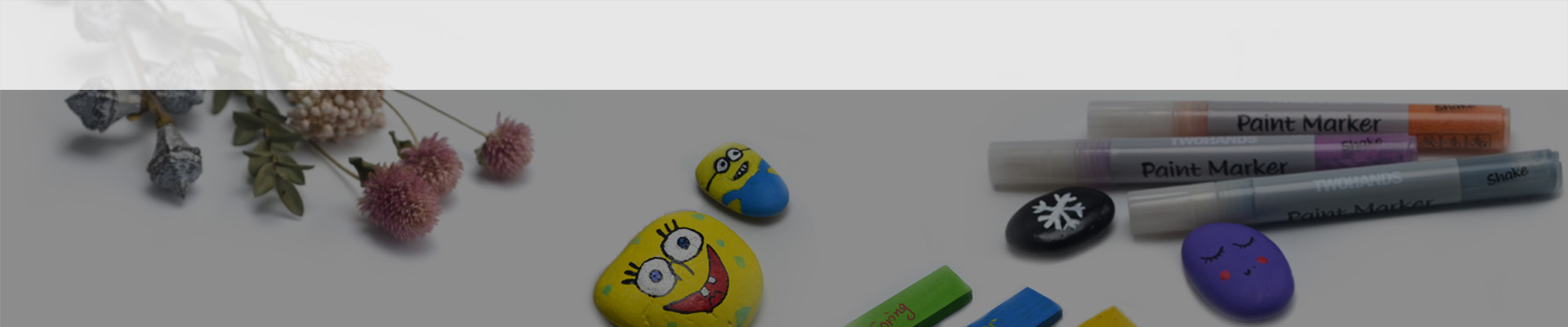
A step-by-step compliance checklist for auditing OEM paint marker factories, covering safety certifications, ink testing, and production readiness.

- A structured factory audit protects your brand from compliance failures, product recalls, and supply chain risk when sourcing paint markers from OEM manufacturers.
- ASTM D-4236 non-toxic certification is our foundational checkpoint — we verify our documentation, test reports, and label claims before we proceed to any other audit step.
- Tip resilience testing, ink color consistency, and packaging compliance are equally critical areas that demand hands-on verification during your on-site visit to our facility.
- We at Twohands Stationery have supported our global brand partners through every one of these audit steps since 2010, and we encourage you to hold us to the highest standards.
When I sit down with a procurement manager who is sourcing paint markers from an overseas OEM manufacturer, my first piece of advice is always the same: make the factory audit your top priority. I have spent over fifteen years working with international buyers at Twohands Stationery, and in my experience, the brands that conduct thorough audits are the ones that avoid costly surprises down the road. I have watched buyers who skip this step pay for it later with product recalls, customs seizures, and damaged retailer relationships. A factory audit is not a formality to me — it is the most important investment you will make in your sourcing relationship.
In this guide, I share the six-step audit process I have refined over my years in the paint marker industry. I walk you through each step with the same detail I share with our visiting partners when they come to our Ningbo facility. Whether you are placing your first OEM order or you are evaluating us as a potential new supplier, my goal is to give you a framework that makes your decision clear and confident.
Why a Factory Audit Matters When Sourcing Paint Markers
Paint markers are among the most technically complex products in our stationery portfolio. I say this because, unlike a standard ballpoint pen or pencil, a paint marker contains pigment-based ink that must perform across an extraordinary range of surfaces — metal, glass, wood, plastic, canvas, and stone. This versatility introduces complexity that I see buyers underestimate regularly. Our ink formulation must be stable, non-toxic under normal use, and fully compatible with our marker barrel, valve system, and nib material. Our tips must withstand repeated pressure without fraying, collapsing, or releasing fibers. Our packaging must communicate safety information clearly and comply with the labeling regulations of every market where our products are sold.
In my years at Twohands Stationery, I have witnessed what happens when a factory is not properly audited. I have seen ink separate within weeks of manufacture at competitor facilities. I have seen nibs degrade after minimal use. I have seen packaging omit critical safety warnings that triggered customs seizures in major markets. These are not hypothetical scenarios to me — I have watched them cost brands tens of thousands of dollars in returns, penalties, and reputational damage. When I tell buyers that an audit is essential, I speak from direct observation of these failures.
A proper factory audit, in my view, evaluates the entire production ecosystem. You are not just checking whether our factory can make a marker that writes. You are verifying that we understand and comply with safety standards such as ASTM D-4236. You are confirming that we have the technical capability to maintain our color consistency across batches. You are assessing whether our quality control systems catch defects before our products leave our facility. You are evaluating whether we have the capacity and flexibility to support your brand’s growth over time. I consider each of these areas non-negotiable.
We at Twohands Stationery have been manufacturing markers since 2010, and I can tell you that we welcome every audit because I know it strengthens our partnerships. In my experience, the audit process itself builds trust. When both of our teams understand the quality benchmarks, the compliance requirements, and the production capabilities, our partnership becomes more predictable and more profitable for everyone involved.
Step 1 — Verify ASTM D-4236 Non-Toxic Certification
The first step in our audit process is one I consider non-negotiable: verifying compliance with ASTM D-4236, the Standard Practice for Labeling Art Materials for Chronic Health Hazards. This standard, maintained by ASTM International, requires that art materials — including our paint markers — undergo toxicological evaluation to determine whether they pose chronic health risks when used as intended. In the United States, the Labeling of Hazardous Art Materials Act (LHAMA) makes this compliance mandatory, and the Consumer Product Safety Commission (CPSC) enforces it. I always start every audit with this step because nothing else matters if the safety foundation is not solid.
During your visit to our facility, I recommend that you request and physically examine the following documentation:
- Our current ASTM D-4236 certification letter, which we maintain from a qualified toxicologist who reviews our ink formulations annually.
- Our Safety Data Sheets (SDS) for every ink formulation we use in our paint marker product lines.
- Our internal test reports confirming that our individual ink components fall below the maximum allowable concentrations for chronic health hazards.
- Our product labels and packaging samples that display the required non-toxic certification statement for each market we serve.
I cannot stress this enough from my experience: do not accept verbal assurances from any factory. I always encourage our visiting partners to physically hold our original certification documents in their hands and verify that they are current. Certifications must be renewed when formulations change, and I have seen factories present outdated certificates that no longer match their current production. If we have recently reformulated an ink — which we sometimes do to improve color vibrancy or drying time — we immediately obtain a new certification before we ship any product from that reformulation.
For our buyers targeting the European market, I also recommend verifying compliance with EN 71 toy safety standards if our paint markers are intended for or may be used by children. EN 71 has its own set of chemical migration limits, mechanical requirements, and labeling obligations that go beyond ASTM D-4236. In our own operations, we maintain dual compliance documentation for both standards because we serve both US and European markets. I keep both sets of documents organized and accessible for every audit because I want our partners to see our full compliance picture.
From my perspective, I have found that factories which take ASTM D-4236 seriously tend to take every other aspect of quality seriously as well. This step is the strongest indicator I know of the overall compliance culture at any facility.
Step 2 — Evaluate Ink Formulation and Color Consistency
Once I have walked our audit visitors through our safety certifications, I move them directly to our ink formulation evaluation. This is where our audit shifts from documentation review to hands-on technical assessment, and it is where I find the most revealing insights about a factory’s true capabilities.
I start by showing our visitors the detailed breakdown of our ink composition for each color in our product line. We disclose our pigment type (organic versus inorganic), our solvent or carrier system, our resin binder, and all of our additives such as flow agents, anti-foaming agents, and UV stabilizers. I do this because I believe a well-documented formulation demonstrates that we control our raw materials and that we understand the chemistry behind every product we make. If a factory cannot or will not share this information with you, I would consider that a significant red flag.
Color consistency is one of the quality metrics I track most closely because I know from our customer feedback how damaging inconsistent products can be to a brand. A red marker from our Batch A must look identical to a red marker from our Batch B produced six months later. To evaluate our consistency, I recommend that you request our retained samples from at least three different production runs of the same color. I provide these samples and invite our visitors to apply each one to an identical surface under controlled conditions and compare them side by side. We use a spectrophotometer in our lab — we aim for a Delta E value below 2.0 between all of our batches for standard commercial applications.
I also recommend testing our ink for the following performance characteristics during your audit visit:
- Drying time: We apply our marker to a non-porous surface and I show you the time until the ink is dry to the touch. We test this on every batch we produce, and our consistency across batches demonstrates our stable formulation.
- Opacity: We apply a single coat over a black-and-white test card. Our ink provides consistent coverage with minimal variation between our batches.
- Bleed resistance: After our ink dries, we apply water or rubbing alcohol to the marked surface so you can verify there is no color migration or smearing.
- Lightfastness: We share our UV exposure test data for our outdoor-rated products. We have invested in our own lightfastness testing equipment because our outdoor partners demand verifiable fade resistance.
At Twohands Stationery, we maintain strict color tolerance standards and we retain reference samples from every production batch we run. When you visit our facility, I always encourage you to conduct your own color evaluations because I am confident in our consistency. If a factory hesitates to let you test their ink on-site, I would take that hesitation seriously.
Step 3 — Test Tip Resilience and Nib Durability
The nib or tip of a paint marker is the component that has the most direct impact on your end customer’s experience, and it is an area where I have seen significant quality variation between different factories. A tip that frays, collapses, or clogs transforms a premium product into a frustrating one. During your audit at our facility, I guide you through four specific tip resilience tests that I consider essential to our quality verification process.
Continuous Writing Endurance Test
I begin by demonstrating our continuous writing test, which we conduct as part of our standard quality control on every production batch. In this test, we use one of our paint markers to draw continuous lines on a standardized test surface — we use smooth white card — until the marker is fully depleted. We inspect the tip at regular intervals, checking every 50 meters of line, for signs of fraying, fiber separation, or deformation. In my experience, a high-quality felt or nylon nib should maintain its shape and line width throughout the entire ink life of the marker. We document our results for every batch, and I share these records with our audit visitors.
Compression Force Test
This test is one I consider critical for paint markers that will be used on rough or textured surfaces. We use our force gauge to press the marker tip against a firm, flat surface at a standardized force of 500 grams for 30 seconds. After releasing the pressure, we inspect the tip under our magnification equipment for permanent deformation. A resilient tip returns to its original shape. In our incoming material inspection, we reject any nib material that fails this test because I will not allow substandard components into our production line.
Drop Impact Test
Paint markers are frequently dropped during shipping, in retail environments, and during everyday use. I always include this test because it simulates real-world conditions that our products will face. We hold a capped marker vertically at a height of one meter and drop it onto our hard test surface three times. After the drops, we uncap the marker and verify that the tip still produces a clean, consistent line without skipping or splattering. In our testing, the tip must remain properly seated in the barrel with no lateral wobble. We have found that this test exposes barrel-to-nib fit issues that our other tests miss.
Cap-Off Exposure Test
I include this test because I know from our customer feedback that users frequently forget to recap their markers. We leave a marker uncapped for 24 hours at room temperature, then test whether it writes immediately and whether the tip has hardened or dried out. This test is particularly important for our water-based acrylic paint markers, where premature drying at the tip can render the product unusable. In our product development, we have optimized our ink formulations specifically to perform well in these cap-off scenarios.
At Twohands Stationery, we conduct all four of these tests as part of our standard quality control. We maintain test records for every production batch we produce, and I share them with our partners upon request. During your audit, I encourage you to ask to review our records and, if possible, watch our tests firsthand. In my experience, the transparency of our testing process tells you more about our commitment to quality than any brochure or presentation ever could.
Step 4 — Assess OEM Customization Capabilities
One of the primary reasons I see buyers choose an OEM partnership is their desire to create products that are tailored to their specific brand and market. During this step of our audit, I recommend that you evaluate our capacity and willingness to deliver customization across several dimensions: ink formulation, tip geometry, barrel design, color range, and branding. Customization capability is one of our core strengths at Twohands Stationery, and I believe it should be a priority for any factory you evaluate.
I recommend asking to see examples of our previous OEM projects. We maintain a portfolio of our custom work that demonstrates our range. I guide our visitors through the following areas:
- Ink customization: Can we develop proprietary ink colors, adjust drying times, or create specialty finishes such as metallic, glitter, or glow-in-the-dark effects? In our R&D lab, we have developed hundreds of custom formulations for our partners.
- Tip customization: Do we offer a range of nib sizes and shapes — fine point, chisel, broad, brush-style — and can we manufacture custom nib geometries for unique applications? We maintain an extensive nib library at our facility.
- Barrel and valve design: Can we modify our marker barrel for ergonomic preferences, different ink volumes, or unique activation mechanisms such as pump-valve versus continuous-flow systems?
- Branding and packaging: Can we print custom logos, apply branded shrink sleeves, and produce retail-ready packaging with your proprietary artwork and regulatory text?
When you are evaluating acrylic paint marker options, you may need a specific pigment formulation that performs well on porous surfaces like canvas and wood while also adhering to non-porous substrates like glass and metal. I have led our product development team through exactly this kind of challenge many times, and our strong R&D capabilities allow us to develop and test such formulations in-house, accelerating your time to market.
At Twohands Stationery, I work directly with our dedicated product development team on OEM partner projects, guiding our work from your concept through our production. During your audit, I recommend requesting a meeting with our R&D department so you can see our development capabilities firsthand. This conversation will give you a realistic sense of how quickly we can turn your specifications into a production-ready product.
Step 5 — Review Packaging and Private Label Compliance
Packaging is more than a container to me — it is a compliance document, and I treat it with the same rigor I apply to every other step in our audit process. In many jurisdictions, the information printed on our paint marker packaging is legally regulated, and I have seen packaging errors result in product seizures, fines, and mandatory recalls. During this audit step, I walk you through our packaging processes and our private label capabilities.
I begin by showing you the current packaging for our existing products. I recommend that you check for the following:
- Safety warnings and certification marks: Our ASTM D-4236 compliance statements, our AP certification logos, CE marks, and our age-grading information are all present and correctly formatted. In our packaging department, we maintain templates for every market we serve to ensure we never omit critical information.
- Ingredient disclosure: Some markets require that key ingredients be listed on the packaging. We maintain updated ingredient databases for all of our formulations, and we verify that our labels meet the disclosure requirements of each target market.
- Barcode and SKU management: If you are selling through retail channels, we can apply unique barcodes (UPC, EAN) and manage SKU differentiation across colors, tip sizes, and package configurations. We have systems in place to handle complex SKU structures for our multi-market partners.
- Language and regulatory text: Products sold in the EU must include multilingual safety information. Products sold in California require Proposition 65 warnings. In our experience serving global brands, we have developed packaging templates for over 30 regional regulatory frameworks.
Private label compliance goes beyond printing your logo on our box. You need to confirm that our packaging line can handle your specific insert cards, blister packs, hang tags, or display units. I recommend requesting a sample run of your branded packaging so you can evaluate our print quality, alignment, adhesive strength, and overall presentation. We have invested significantly in our printing and packaging equipment because I believe our packaging quality reflects directly on the brands we serve.
We have worked with dozens of brands on private label projects, and I know from our feedback that packaging quality is one of the first things end consumers notice. During your audit at our facility, I will personally walk you through our packaging line and show you examples of the private label work we have delivered for our global partners.
Step 6 — Validate Production Capacity and Lead Times
The final step in our audit is one I consider critical for our long-term partnership: assessing whether our factory can meet your volume requirements within your required timelines. This step is often underestimated, but in my experience it directly impacts your ability to maintain inventory, fulfill orders, and respond to market demand.
I recommend starting by reviewing our production data. I provide the following information to every audit visitor:
- Monthly production capacity: I share exactly how many paint markers we can produce per month across all of our lines and colors. At Twohands Stationery, we publish our capacity figures transparently because I believe our partners need this data to plan effectively.
- Current utilization rate: I disclose what percentage of our capacity is currently committed to existing orders. In my experience, a factory running at 95 percent utilization will struggle to accommodate your urgent orders, and I have seen this create serious supply disruptions for brands that did not ask this question upfront.
- Lead time from order confirmation to shipment: I share our lead times for standard orders, rush orders, and new product development runs. Our typical lead times for paint markers range from 30 to 45 days, depending on complexity and volume.
- Raw material sourcing: I explain our raw material inventory strategy. We maintain safety stock of our most critical raw materials because I never want our partners to experience delays caused by supply chain volatility.
I also recommend that you walk our production floor and observe our equipment, workforce, and workflow firsthand. When I walk our floor with visiting partners, I point out our modern, well-maintained machinery, our organized workflow stations, our visual management boards, and our in-process quality checkpoints. I want you to see exactly how we operate because I am proud of the systems we have built.
At Twohands Stationery, we have expanded our production capacity multiple times since 2010 to keep pace with the growing demand from our global partners. During your visit, I will provide you with our transparent capacity data and discuss how we can plan production schedules that align with your seasonal requirements and promotional calendars. I believe that capacity planning is a shared responsibility between our factory and our buyers, and the audit is the right time for us to establish that planning framework together.
Putting It All Together: Your Audit Scorecard
After you complete all six steps at our facility, I recommend organizing your findings into a structured audit scorecard. In my experience, a weighted scoring system works best because it reflects the relative importance of each area for your specific business needs. Below is the framework I suggest to every buyer who visits us:
| Audit Step | Weight | Score (1-10) | Notes |
|---|---|---|---|
| Step 1: ASTM D-4236 Non-Toxic Certification | 25% | Our documentation verified? Our certifications current? | |
| Step 2: Ink Formulation and Color Consistency | 20% | Our batch-to-batch Delta E below 2.0? | |
| Step 3: Tip Resilience and Nib Durability | 20% | All four of our tests passed? | |
| Step 4: OEM Customization Capabilities | 15% | Our R&D team strength and portfolio depth? | |
| Step 5: Packaging and Private Label Compliance | 10% | Our regulatory text and print quality? | |
| Step 6: Production Capacity and Lead Times | 10% | Our capacity buffer available? |
I suggest setting a minimum threshold of 7.0 out of 10 as your overall passing score. Any single step scoring below 5.0 should be treated as a critical finding that requires remediation before you proceed with a purchase order. After the audit, I recommend sharing your scorecard with our management team and requesting a corrective action plan for any areas that fell short. In my experience, a responsive factory will treat your feedback as an opportunity to improve and will commit to specific, time-bound improvements.
At Twohands Stationery, I use audit feedback from our partners to drive continuous improvement across our operations. I have personally implemented changes based on buyer audit findings, and I believe that our audit process is not a one-time gate but an ongoing partnership tool that keeps our quality standards high and our communication open between our teams.
Frequently Asked Questions
How long does a typical paint marker factory audit take?
In our experience hosting audits at our Ningbo facility, a thorough paint marker factory audit typically takes between two and five working days, depending on how deep you want to go. When we guide our visiting partners through our full six-step process, we usually recommend they allocate at least three days. We suggest spending day one on documentation review and our ASTM D-4236 certification records. On day two, we walk our guests through our production lines, our ink formulation lab, and our tip resilience testing stations. Day three is when we review our packaging capabilities, our capacity data, and hold our closing meeting. We have found that buyers who try to rush through in a single day often miss details that matter later.
What is ASTM D-4236 and why is it essential for paint markers?
ASTM D-4236 is the standard practice from ASTM International that governs how art materials, including our paint markers, must be labeled regarding chronic health hazards. We treat this as the foundational requirement in our manufacturing process at Twohands Stationery. The standard requires us to have our ink formulations toxicologically reviewed and certified as non-toxic under normal use conditions. For our buyers, this means every paint marker we ship carries verified non-toxic certification. We maintain current certification documents from qualified toxicologists for every ink formulation we produce, and we present these documents to our audit visitors on day one of their evaluation.
Can I request custom color matching during an OEM audit?
Absolutely, and we encourage every buyer who visits us to bring their Pantone reference swatches. Custom color matching is one of the most common requests we handle during OEM audits. We invite our guests to sit with our color matching team, watch us formulate samples in real time, and test the results against their reference cards. We recommend evaluating our consistency across at least three production batches so you can see how our color holds over time. We have invested heavily in our color matching capabilities because we know that color consistency is one of the first things our partners’ customers notice.
What certifications should a paint marker factory hold beyond ASTM D-4236?
Beyond ASTM D-4236, we believe a reputable paint marker factory should demonstrate compliance with several additional standards depending on the target market. We maintain EN 71 compliance for our products that may reach European children. We hold AP certification from ACMI for our North American market products. Our ISO 9001 certification reflects our systematic approach to quality management. For our US retail partners, we keep our CPSC registration and CPSIA compliance current. We also hold ISO 14001 environmental certification because we believe our responsibility extends beyond product quality to our environmental impact.
How do I test tip resilience during an on-site factory visit?
When you visit our facility, we guide you through four specific tip resilience tests that form our standard quality control protocol. We begin with our continuous writing endurance test, where we draw with a marker until depletion and inspect the tip every 50 meters for fraying or deformation. We then perform our compression force test, pressing the tip at 500 grams for 30 seconds and checking for permanent flattening. Our drop test involves dropping a capped marker from one meter onto a hard surface three times and verifying the tip stays aligned. Finally, we run our cap-off exposure test, leaving a marker uncapped for 24 hours and checking whether it still writes properly.
What is the minimum order quantity for OEM paint markers at Twohands?
At our facility, we offer flexible minimum order quantities because we understand that every partner has different volume needs. For our standard acrylic paint markers using our existing ink formulations, we typically set our MOQ at 5,000 units per color. When a buyer requests a fully custom formulation with new ink chemistry or specialty tip designs, our MOQ usually starts around 10,000 units. We always invite our prospective partners to discuss their volume requirements during the factory audit because we can often work out arrangements for smaller trial orders. We want our new partners to feel confident in our capabilities before they commit to larger runs.
Written by Wendy
Company Manager at Twohands Stationery. Since 2010, Twohands has been a professional manufacturer and innovator in the stationery industry, dedicated to producing a wide range of high-quality pens including dry erase markers, acrylic paint markers, highlighter pens, and micro drawing pens. We have built an excellent reputation for reliability and become a trusted partner of many well-known global brands. Writing, drawing, creating — choose Twohands Stationery to meet your writing and drawing needs.
Post time: Jul-13-2026
